
Helping someone who hoards starts with one shift: stop treating it as a
cleaning problem and start treating it as a health condition with a
cleaning consequence. Hoarding disorder is a recognized diagnosis, it
frequently follows grief or illness, and it does not respond to
pressure, deadlines, or arguments about what an item is worth.
If you are here because a parent's home has quietly become unsafe, or a
sibling will not let anyone past the front door, you are not overreacting
and you are not alone. This is far more common than families realize.
Here is what tends to work.
Why the usual approach backfires
The usual approach — clear it out while they are away and hope they
adjust — reliably backfires. Forced cleanouts done without consent tend
to be followed by rapid re-accumulation, and by a loss of trust that can
close the door on help for years.
The reason is that the belongings are doing a job. They may represent
safety, memory, potential usefulness, or a person who is no longer here.
Removing them without addressing that leaves the need fully intact. The
practical takeaway is simple. Consent is not a courtesy in this work; it
is the thing that makes the result last.
What helps, and what makes it worse
What helps almost always sounds smaller than what families want to do. The two lists below come straight from how these conversations tend to go in real homes.
Try this
- Lead with safety and health, not tidiness
- Ask permission before touching anything
- Start with one small, agreed-on area
- Use their words for their belongings
- Let them make every keep-or-go decision
- Accept slow progress as real progress
Avoid this
- Clearing the house while they are out
- Throwing things away secretly
- Ultimatums and deadlines
- Calling their belongings junk or trash
- Surprise interventions with relatives
- Arguing about what an item is worth
How to start the conversation
Start the conversation with a specific worry rather than a general
verdict. "The hallway is blocked and I am scared about a fire" lands
very differently from "this place is a disaster." One is about them; the
other is about the mess, and only one of those invites a reply.
Ask permission before touching anything, even a single box. Use their
language for their belongings — collection, supplies, projects — not
junk. Then propose something narrow and achievable: one closet, the path
to the back door, or the stove. A small agreed-on win is worth more than
a whole-house plan they never consented to.
When it stops being clutter and becomes a safety issue
Safety issues change the calculation and the urgency. Blocked exits and
hallways, non-working heat, water, or electricity, human or animal
waste, spoiled food, mold, and pest infestations all move a home out of
the "hard to look at" category and into a genuine health hazard,
particularly for an older adult or someone with mobility limits.
Our guide to
the 5 levels of hoarding
explains where that line usually falls. Broadly, biohazards begin
appearing around Level 3 and are the norm at Levels 4 and 5. Once they
are present, the home needs decontamination rather than tidying — which
is where
professional hoarding cleanup
comes in. Where animals are involved, the health risks are different
again and
animal hoarding cleanup
covers that specifically.
Minnesota resources worth knowing about
Minnesota resources exist for exactly this situation, and most families have never heard of them. These are the ones we point people toward most often. None of them are ours, and none of them cost anything to call.
Minnesota Adult Abuse Reporting Center (MAARC)
1-844-880-1574The statewide line for reporting concerns about the safety of a vulnerable adult, including living conditions that put an older or disabled adult at risk. Available around the clock.
Senior LinkAge Line
1-800-333-2433Minnesota's free service for older adults and their caregivers. Useful for connecting a parent to in-home support, county services, and care options rather than a one-off cleanup.
NAMI Minnesota
namimn.orgMental health education, family support groups, and referrals across Minnesota. Their family programs are aimed squarely at the relative doing the worrying.
International OCD Foundation
iocdf.orgMaintains a hoarding resource center, therapist directories, and information on peer-led support groups and treatment approaches that have evidence behind them.
Your county health and human services office
Adult protection & social servicesEach of the seven metro counties runs adult protective services and social work programs that can assess a situation and coordinate longer-term support.
988 Suicide & Crisis Lifeline
Call or text 988If a conversation about the home turns into a crisis, or you are worried about immediate risk to someone, 988 connects you to trained help right away.
Take care of the helper too
Families carrying this often carry it for years, quietly, while keeping up appearances for everyone else. Guilt, exhaustion, and resentment are normal responses to a genuinely hard situation. Family support groups exist because this affects you as well, and using one is not a sign that you have failed anybody.
When the cleanup day comes
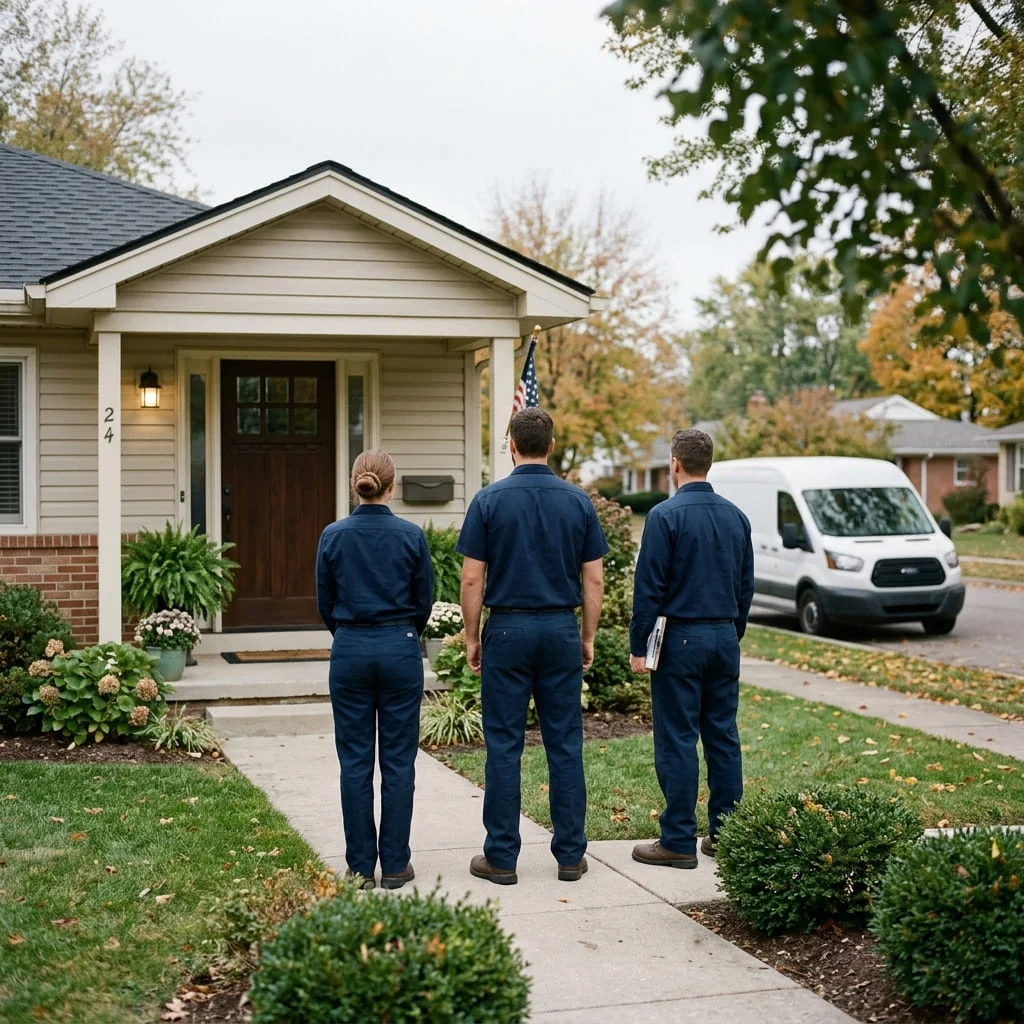
The cleanup day works best when it has been agreed to rather than
sprung. Biohazard Cleanup MN arrives in unmarked vehicles and plain
clothing, works at whatever pace the person can handle, and never
discusses the situation with neighbors. Valuables, documents, and keepsakes are set aside as we
go and handed back at the end.
If you want a sense of what to expect, our guide on
how long hoarding cleanup takes
breaks the timeline down by home size and severity. And if you are not
ready to schedule anything, calling to talk it through is completely
fine. Most people call us long before they are ready to book.
Talk it through with someone who has seen it before
Call and describe the situation. We will tell you honestly what is involved, whether it is urgent, and what your options are — no judgment, no pressure, and nothing shared with anyone.
Call (612) 493-2982