
Service
Hoarding cleanup, handled with care and discretion.
Clearing a hoarded home is hard, emotional work. We do it gently and thoroughly — sorting, removing, cleaning, and restoring the space so it's safe and livable again, without judgment and without drawing attention.

Overview
More than hauling things out — restoring a home.
Hoarding rarely starts as a mess. It builds slowly, often alongside grief, illness, or a hard stretch of life, until a home that once felt normal becomes unsafe to live in. By the time someone calls, the clutter may be blocking exits, hiding damage, or mixed with spoiled food, waste, or pests. It can feel impossible to know where to begin.
Hoarding cleanup works room by room. Belongings that matter are separated from debris, what needs to go is removed, and everything underneath is deep-cleaned and decontaminated: floors, walls, surfaces, and air. The goal is a home that is genuinely safe and livable, not just emptier. If you are not sure where to start, call (612) 493-2982 and talk it through. There is no judgment on this line.
What a hoarding cleanup includes
- Room-by-room sorting, valuables set aside
- Removal & proper disposal of debris
- Biohazard & waste decontamination
- Pest and mold treatment where needed
- Deep cleaning of floors, walls & surfaces
- Odor neutralized at the source
- Discreet, unmarked hauling
- Coordination with family or case workers
How hoarding cleanup works in the Twin Cities
Hoarding cleanup in the Twin Cities starts with an assessment, because no two homes are alike. A cleanup pro looks at how much is in the home, how far it reaches, whether exits or stairs are blocked, and whether waste, pests, or mold are involved. That visit, or a set of photos, sets the scope, the crew size, and the timeline.
Professionals often describe severity in levels, from light clutter to a home with structural or sanitation hazards. The guide to the five levels of hoarding explains where a home may fall and why that changes the job. A lighter home might take a day or two. A heavily affected home can take a week or more, which is covered in how long hoarding cleanup takes.
Cost follows the same logic. Square footage, volume of debris, and the presence of biohazards drive the price more than anything else. A written, line-item estimate before work begins is the norm to expect, and the hoarding cleanup cost guide lays out realistic Minnesota ranges so the number is not a surprise.
Why hoarding cleanup is more than a regular cleanout
Hoarding cleanup is more than a regular cleanout because the clutter is rarely the only problem. Piled belongings trap moisture, hide leaks, and give rodents and insects somewhere to live. In Minnesota, where homes are sealed up for much of the heating season, odor and humidity build quickly in a closed-up house. Mold behind stacked items, spoiled food, and pet or human waste are all common.
Those hazards are why the work is done in order: clear a safe path first, sort and remove next, then clean and decontaminate surfaces, and finally treat odor at the source. Skipping straight to hauling leaves the real problem behind. Some homes also need repairs before they are habitable again, such as flooring, drywall, or pest control, which is worth raising at the assessment.
When animals are part of the picture, the job changes again. See animal hoarding cleanup for the extra steps involved. For homes with heavy contamination but less clutter, gross filth and squalor cleaning may be the better fit.
Who usually calls about hoarding cleanup
Most callers are not the person who hoards. They are someone trying to help: an adult child worried about a parent, a landlord who needs a discreet cleanout, an executor preparing an estate, or a case worker arranging help for a client. If you recognize yourself here, you are not alone, and this is far more common than most people realize.
If you are supporting a loved one who is not ready, the guide on how to help a family member who hoards covers what to say, what to avoid, and when to bring in help. When a home is being cleared after a death, the work often overlaps with estate cleanouts.
Discretion is part of the job
Vehicles are unmarked, crews wear plain clothing, and the situation is never discussed with neighbors or anyone else. As far as anyone outside needs to know, it is just people helping with a home.
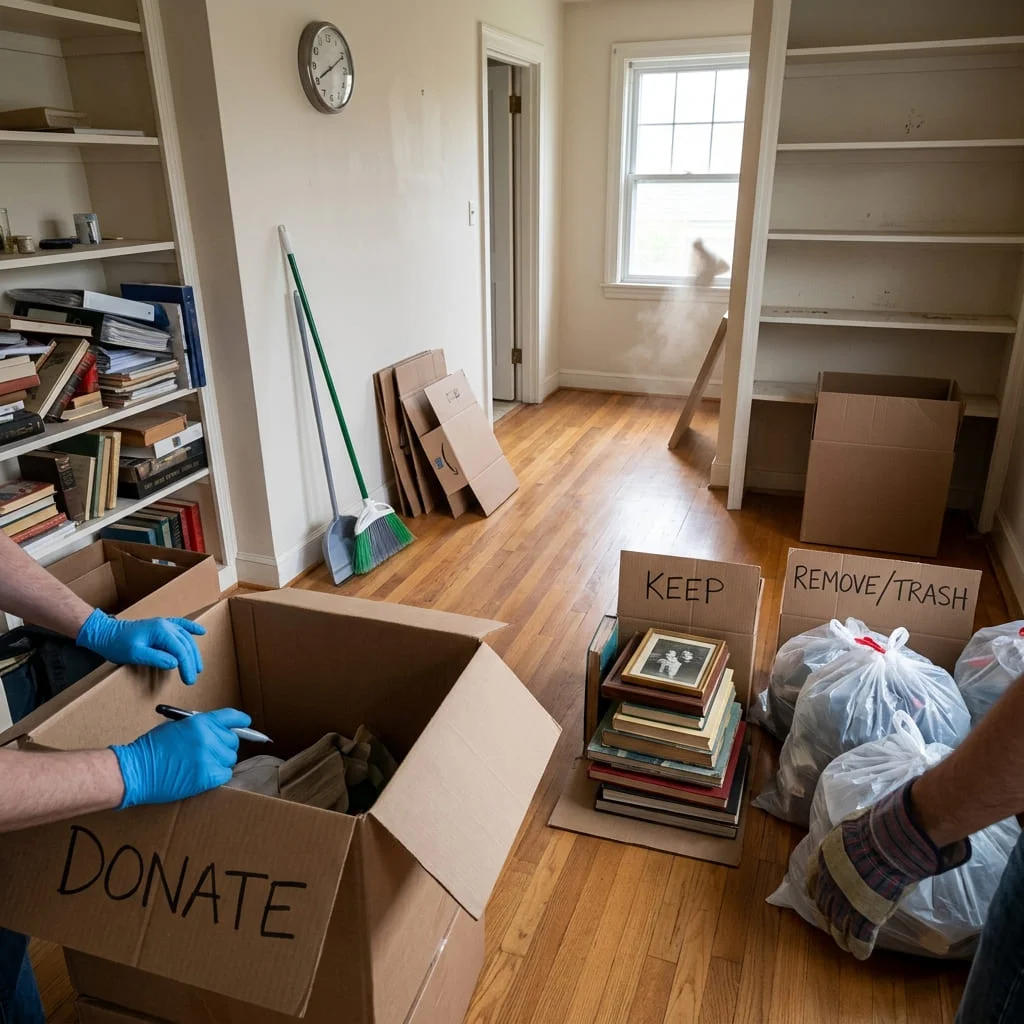
What stays and what goes during a hoarding cleanup
What stays and what goes is decided by the owner, not the crew. A careful cleanup sets aside anything of value or meaning before disposal begins: legal papers, photographs, cash, jewelry, medication, and keepsakes. Items are usually sorted into three groups: keep, donate or recycle where possible, and dispose. Hoarding is often tied to attachment and anxiety, so the pace matters. You can say stop, slow down, or come back to a room, and a good crew expects that.
Does insurance cover hoarding cleanup?
Insurance often covers hoarding cleanup in part, but not always. When a situation involves biohazards such as waste, pests, mold, or water damage, many homeowner’s policies help with the cleanup. Coverage varies by policy and cause, and straightforward clutter removal is frequently not covered. Nothing here is a promise about your policy. Ask your insurer what it says, and ask the cleanup company to document the home’s condition with photos and a written scope you can send to your adjuster.
Hoarding cleanup across the Twin Cities metro
Hoarding cleanup across the Twin Cities metro looks different from one part of the region to the next. Older houses in the inner suburbs often have tight rooms, steep basement stairs, and decades of stored belongings. Newer homes in the outer ring tend to be larger, with finished basements and attached garages that fill up too. Rural properties in the surrounding counties may add outbuildings, barns, and long driveways to the scope.
Hoarding cleanup is available throughout Hennepin, Dakota, Anoka, Carver, Scott, Ramsey, and Washington counties. Local pages cover the details for Minnetonka, Maple Grove, Anoka, Inver Grove Heights, Hastings, and Chaska, along with dozens of other towns on the service areas page. If a home is on a small lot or a busy road, privacy can shape how the work is staged, and that is worth mentioning on the first call.
How to choose a hoarding cleanup company
Choosing a hoarding cleanup company comes down to a few fair questions. Ask for a certificate of insurance before work starts. Ask for the scope and a line-item estimate in writing. If biohazards are involved, anyone handling blood or bodily fluids should carry current OSHA bloodborne-pathogen training, and it is reasonable to ask to see it. Ask how valuables are handled and who will be in the home.
Ready to talk? Call (612) 493-2982 and we’ll get someone out for an assessment, or browse all service areas to find your city.
What the work looks like
Careful, room-by-room progress.


Our process
From the first call to a restored home.
- Step 1
A private conversation
You call, we listen. We ask a few gentle questions about the home and who it belongs to, then arrange an assessment. There is no judgment on this line.
- Step 2
Assessment & written plan
A cleanup pro looks at the space in person or by photos, then walks you through scope, timeline, and how insurance may apply. You get the estimate in writing before any work starts.
- Step 3
Sorting, removal & cleaning
Room by room, crews separate belongings from debris, remove what needs to go, then clean, decontaminate, and treat for pests or mold.
- Step 4
A walk-through with you
You see the finished space and receive everything that was set aside along the way.
Frequently asked
Hoarding cleanup questions.
How much does hoarding cleanup cost in Minnesota?
It depends on the size of the home, how much needs to be removed, and whether biohazards like waste, pests, or mold are involved. A single cluttered room costs far less than a whole house at the heaviest levels. Ask for a written, line-item estimate before work begins, and see the hoarding cleanup cost guide for typical ranges.
Will everything be thrown away?
No. Belongings are sorted carefully, and anything valuable or meaningful is set aside: documents, photos, keepsakes, cash, jewelry. Nothing important should be discarded without the owner’s say-so.
Do I need to be there during the cleanup?
It's up to you. Some people want to be present for decisions; others find it too hard and prefer to step away. Either works, and a good crew checks in before anything irreversible.
Is the cleanup kept private?
Yes. Service is discreet: unmarked vehicles, plain clothing, and no conversations with neighbors about the situation.
How long does a hoarding cleanup take?
A single room might take a day. A whole home with heavy buildup can take several days or more. After the assessment you can get a realistic timeline for your specific space.
Does the cleanup include odor, pests, and biohazards?
It should. Hoarded homes often come with odor, rodents, insects, mold, or human or animal waste. A proper cleanup clears the belongings and then cleans, decontaminates, and deodorizes the home underneath.
Can a landlord or property manager arrange a hoarding cleanout?
Yes, and landlords are among the most common callers. Photographing the unit before and after is smart. Minnesota tenant rules are strict, so check the process with an attorney before clearing an occupied unit.
What areas do you serve?
The seven-county Twin Cities metro (Hennepin, Ramsey, Dakota, Anoka, Carver, Scott, Washington County) plus the surrounding towns. Call and we’ll get someone out for an assessment.
Ready when you are — no pressure.
Whether you're ready to start or just have questions, call and we'll talk it through. Everything stays private.