
An unattended death in Minnesota follows a predictable sequence: 911,
law enforcement, the county medical examiner, transport, and then the
release of the property back to the family. Five steps, usually
completed within a day or two. What surprises almost everyone is the
last one — when the investigation ends, the home is handed back exactly
as it was found, and no public agency cleans it.
If you are reading this in the middle of it, take a breath. You do not
have to make every decision today. This guide explains what is
happening, what comes next, and what is actually yours to arrange.
What "unattended death" means
An unattended death means the person died alone, with no one present,
and was not found immediately. It has nothing to do with fault or
neglect. It happens to people who live alone, to people whose health
declined quietly, and to people whose family checks in weekly rather
than daily.
Because no one witnessed the death and no doctor was attending, the
death is legally unexplained until an official reviews it. That is why
911 and the medical examiner are involved even when the cause turns out
to be entirely natural.
The sequence, step by step
The sequence below is what families across the Twin Cities metro typically experience. Timing varies by county and by how busy the medical examiner's office is that day.
Call 911 — before anything else
Any death discovered at home is reported to 911, even when it is clearly not a crime. Do not move the person, open windows, or start cleaning. Step outside and wait for responders.
Law enforcement secures the scene
Officers confirm the death, secure the property, and notify the county coroner or medical examiner. They will ask how the person was found and who last saw them. This is routine, not an accusation.
The medical examiner takes jurisdiction
Minnesota law directs that sudden, unexpected, and unattended deaths be reported to the county coroner or medical examiner, who decides whether to investigate and whether an autopsy is needed.
The person is transported
The medical examiner arranges transport, or releases the person directly to the funeral home your family chooses. Nothing else in the home is removed, cleaned, or restored during this step.
The scene is released to the family
Once the investigation is done, the property comes back to the owner or next of kin — in the condition it was left in. Everything after this point, including the cleanup, is a private matter for the family or property owner to arrange.
Who is responsible for the cleanup
Responsibility for the cleanup falls to whoever owns or is settling the
property — not to the county, the police, or the funeral home. In
practice that means one of three people. For an owned home, it is the
homeowner or, if the person who died owned it, the next of kin or the
personal representative of the estate. For a rental, it is the landlord
or property manager. For a home already in probate, it is generally
handled as an estate expense.
This is not a gap in the system so much as a boundary in it. Public
agencies investigate deaths; private companies remediate property. It
catches families off guard because nothing in the process announces it
until the scene is released.
You do not have to see the room
No family member should feel obligated to look at, photograph, or clean the area. We can assess a scene, work, and complete the job without you ever entering the space. Many of the people who call Biohazard Cleanup MN never go back in until the room is restored, and that is a completely reasonable choice.
Why this is a biohazard job, not a cleaning job
Decomposition releases fluids and bacteria that travel far past what is
visible. Fluids follow gravity and seams — under vinyl and laminate,
into carpet pad and tack strip, through subfloor joints, down into the
floor joists, and sometimes into a basement ceiling below. Odor
molecules move separately, through the air and into HVAC returns,
drywall, and soft furnishings.
That is why surface cleaning fails. A proper
unattended death cleanup
means testing how far contamination spread, removing the affected
materials rather than washing them, decontaminating the structure
underneath, treating odor at its source instead of masking it, and
disposing of the waste as regulated material through approved channels.
Where blood is the primary concern rather than decomposition, the same
principles apply to
blood and bodily fluid cleanup.
What it costs and who pays
Cost depends on how far the contamination traveled, not on the size of
the home. A contained situation discovered quickly is a much smaller
project than one that went undiscovered through a warm week and reached
the subfloor. We give a clear written estimate before any work starts.
Many homeowner's policies help cover this kind of remediation, and
Minnesota families are often eligible for more help than they expect.
Our guide on
who pays for death and crime scene cleanup
walks through insurance, victim assistance, and estate options in
detail.
A few practical things that help
There are small steps that make the days ahead easier. Keep the doors
closed and leave the HVAC system off if you can, because running it
moves odor through the whole house. Write down the case number and the
name of the responding agency, since insurance will ask for it. Do not
let well-meaning relatives start bagging things up, as this spreads
contamination and can complicate a claim.
And call before you commit to anything. A short conversation usually
clears up more than an afternoon of searching, and it costs nothing.
Call when you are ready — we will take it from there
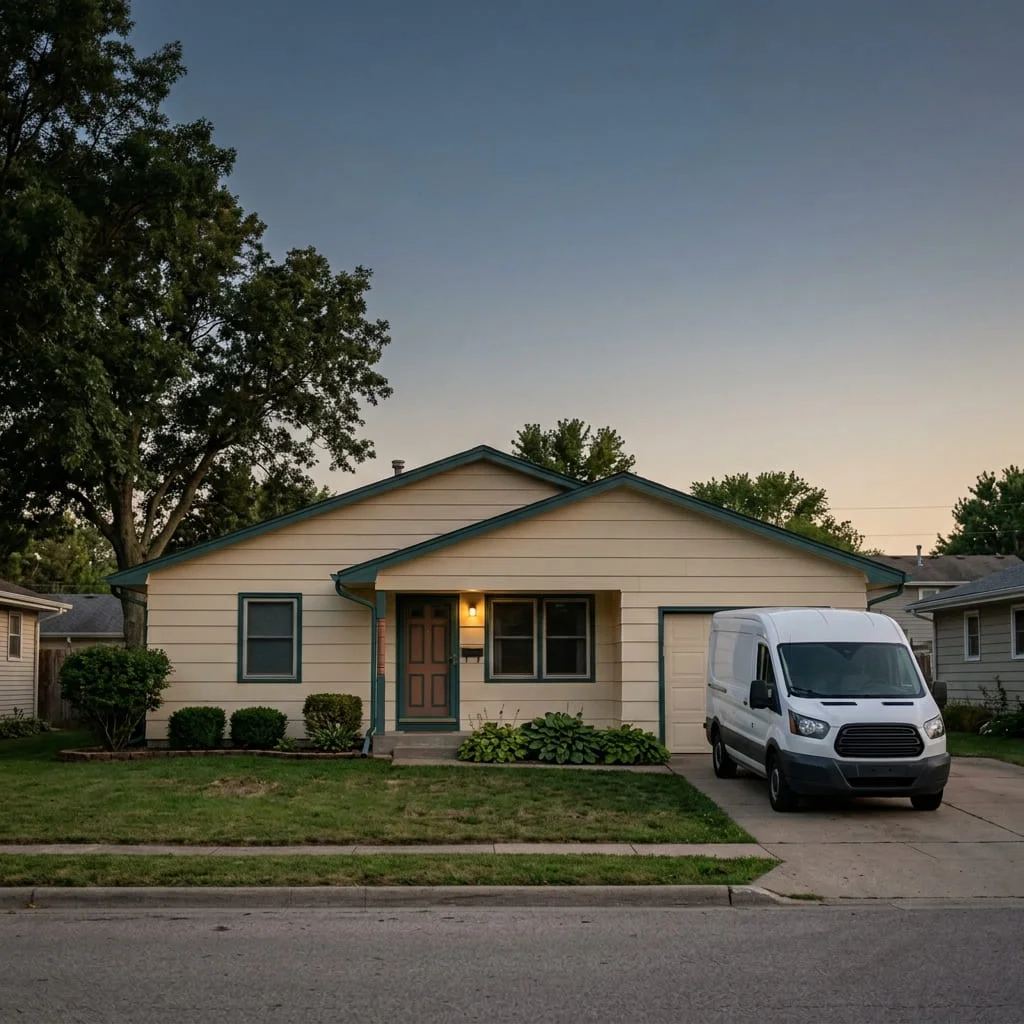
Answered by a real person. We will explain what is involved, help you understand the insurance side, and arrive discreetly in unmarked vehicles.
Call (612) 493-2982