
Hennepin County
Hoarding and biohazard cleanup in Dayton, Minnesota.
Discreet cleanup for Dayton homes above and below the river bluff — hoarding, gross filth, mold and odor, estate clearing, and after-death care. Unmarked vehicles. Call anytime.
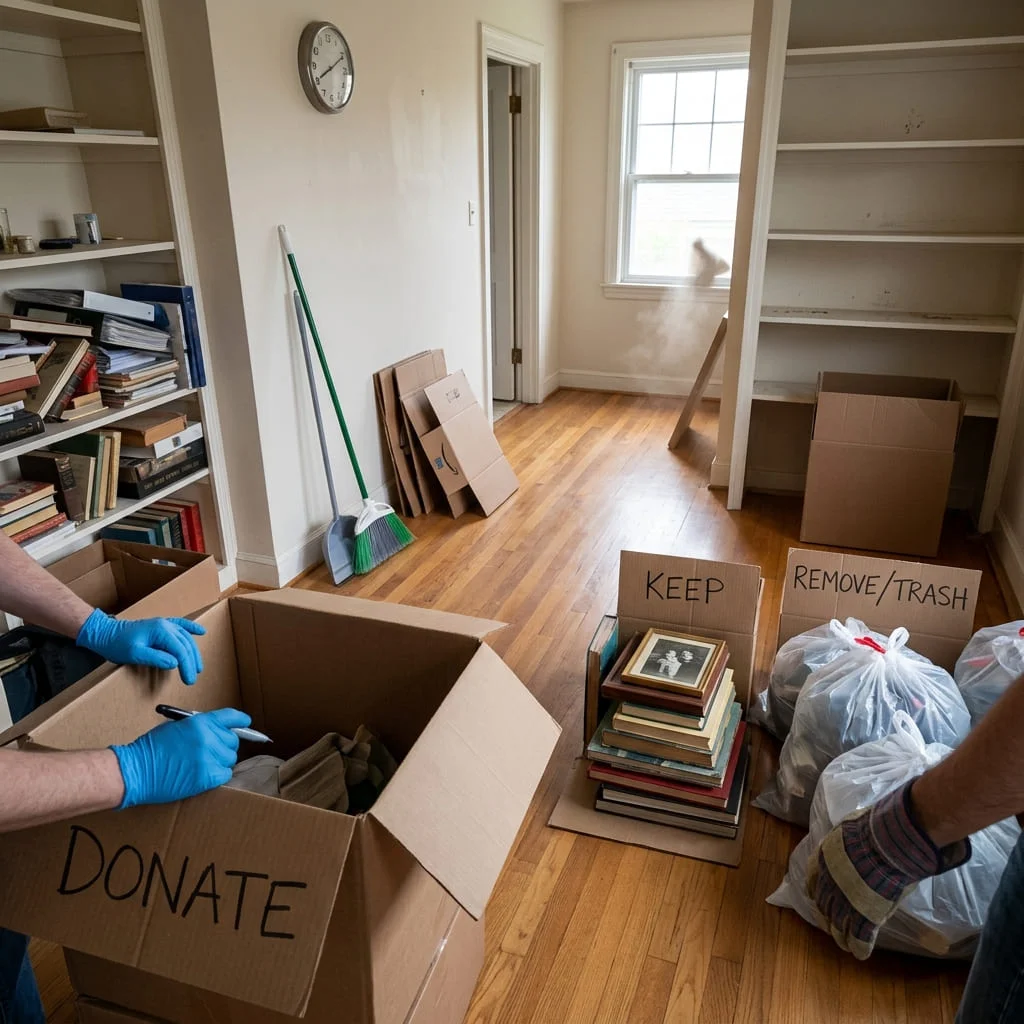
Dayton sits in the far northwest corner of Hennepin County where the Crow River meets the Mississippi, with part of the city reaching over into Wright County. Biohazard Cleanup MN covers all of it. Hoarding cleanup is what we are called for most here, with gross filth remediation, mold and odor work, estate clearing, and after-death care close behind.
It is really two cities in one. New subdivisions on the higher ground to the north and east, and older homes on the river flats and the bluff that have been there through every high-water year the two rivers have produced. On the low ground, one question changes almost every answer that follows: how many times has this house been wet?
Services in Dayton
Hoarding cleanup leads — the rest follows as needed.
Hoarding and squalor account for most of our river-corridor calls. Where a death, an active biohazard, or a full property clearance is involved as well, the same visit covers all of it.
- Hoarding Cleanup Flagship Compassionate, judgment-free clearing of hoarded homes — one room at a time. View details
- Animal Hoarding Cleanup Safe cleanup of homes affected by animal waste, odor, and contamination. View details
- Unattended Death Cleanup Careful, discreet cleanup after a death that went undiscovered. View details
- Crime Scene Cleanup Thorough biohazard cleanup and restoration after a crime. View details
- Blood & Bodily Fluid Cleanup Proper decontamination of blood and bodily-fluid spills. View details
- Suicide Cleanup Gentle, private cleanup so families never have to face the scene. View details
- Gross Filth & Squalor Cleaning Deep cleaning and sanitizing of severely neglected living spaces. View details
- Estate Cleanouts Full property clearing when a home also needs biohazard care. View details
Why the water history comes before the estimate
The water history comes before the estimate because it decides what is
salvageable, and salvage decides the size of the job. Two Dayton
basements can hold an identical volume of belongings and be completely
different pieces of work — one a sorting job where most of it can be
cleaned and kept, the other a removal job where almost nothing on the
floor is coming back.
A hoarded lower level also hides its own water damage, which is the
part people do not expect. Stacked belongings block the sightline to
the slab, hold moisture against the wall, and stop air moving, so a
basement can have been quietly damp for years without anyone upstairs
knowing. These are the three things Biohazard Cleanup MN asks about
before anyone talks about a number.
What we ask about water, before quoting
Question one
Has the basement or crawl space ever taken water?
Not the dramatic answer — the ordinary one. A sump that failed for a weekend, seepage along a wall every spring, a window well that overflowed once in a heavy summer storm. Anything stored flat on a slab that has been wet is a different proposition from the same box upstairs, because the cardboard, the paper, and the fabric have already absorbed it and dried at least once.
Question two
Was it clean water, groundwater, or a sewer backup?
This is the question that changes the category of the job. Clean water from a supply line is one thing. Groundwater and overland water carry soil and whatever the ground had in it. A backup through a floor drain is a biohazard event with its own containment, disposal, and decontamination requirements, and it is handled as such rather than as a wet cleanup.
Question three
How long did it sit before anything dried?
Time drives mold growth far more than volume does. Two inches that were pumped and dried within a day leave a very different basement from two inches that sat for a week behind stacked belongings nobody could move. In a hoarded basement the second version is much more common, because the water is usually found late.
Nobody is expected to know all three answers. Half the time the honest answer is "we have no idea, nobody has been down there in years" — and that is a perfectly good starting point, because it tells us to open the lowest level first.
Call (612) 493-2982How a river-valley basement gets cleared
A river-valley basement gets cleared from the top layer down, and
photographed before anything moves. Working down in layers keeps the
pile stable, keeps anyone from standing on material that may be
softer than it looks, and means the slab is exposed last rather than
first — which is when the actual condition of the floor and the lower
walls finally becomes visible.
Photographs matter here more than in a dry house. If any part of what
is found turns into an insurance conversation later, the difference
between a documented condition and a described one is the difference
between a claim and an argument. We photograph the state of the space
at each layer as a matter of routine, and you get copies.
What a Dayton cleanup involves
A Dayton cleanup involves sorting first, then cleaning, then
verification, with the lowest level treated as its own project.
Documents, photographs, keepsakes, cash, jewellery, firearms, and
titles are set aside for the family or the executor rather than
cleared into a load. Paint, fuel, solvents, and lawn chemicals from a
garage or outbuilding are separated and taken to a county household
hazardous waste facility rather than mixed into a container.
Then the surfaces underneath are cleaned and decontaminated, mold is
addressed at the material rather than sprayed over, affected materials
are removed, and odor is neutralised at its source. Many cleanups of
this kind are covered in whole or in part by homeowner's insurance
depending on the cause and the policy. See
hoarding cleanup for the
method in full,
gross filth and squalor cleaning
where a home has gone years without upkeep,
estate cleanouts
when a river property is being emptied and sold, and
who pays for cleanup
if insurance is part of the question. To talk it through first,
call (612) 493-2982 any time.
Coverage & response
Serving Dayton, the river corridor, and northwest Hennepin.
Response time
Biohazard Cleanup MN takes calls anytime and a real person picks up. Same-day or next-day visits to Dayton are usually possible, and anything involving a death or an active biohazard moves to the front of the schedule.
Who calls us here
Adult children clearing a parent's river property, executors and personal representatives, landlords turning over a rental, and homeowners who finally opened the basement door and found out how far it had gone.
Nearby communities
We cover all of Hennepin County, the Wright County side of Dayton, and the six other metro counties. The nearest communities with their own pages are linked here.
Frequently asked
Dayton questions, answered honestly.
Our basement has flooded before. Does that change the cleanup?
It changes what can be saved rather than whether the job can be done. In a Dayton home on low river ground, Biohazard Cleanup MN treats the lowest level as its own assessment: what has been wet, how often, how long it stayed wet, and what is underneath it. Porous items resting on a slab that has taken water repeatedly are usually beyond cleaning, while the same belongings a floor up may be perfectly fine. Knowing that before we start is what keeps us from either throwing out things that were salvageable or cleaning things that were never going to come back. Call (612) 493-2982 and we will talk through the water history first.
Is water damage covered the same way as a hoarding cleanup?
Usually not, and it is worth understanding the difference before you file anything. Standard homeowner’s policies in Minnesota commonly exclude overland flooding, which is covered instead by separate flood insurance; a sudden sewer or drain backup is often covered only where a specific endorsement was added to the policy. Sudden internal water, such as a burst supply line, is treated differently again. Which of those a claim falls under is decided by your carrier and your policy language, not by us, so the honest advice is to read the declarations page and ask the carrier directly. Our guide on who pays for cleanup walks through how insurance tends to treat biohazard work.
Part of Dayton runs into Wright County. Do you still come out there?
Yes. Biohazard Cleanup MN covers the whole metro, and the city line running across a county boundary makes no difference to whether we drive out. It does matter for two practical things: which county’s household hazardous waste facility takes the paint, fuel, and chemicals that come out of a garage, and which county office handles a property record or a permit question. We sort that out at the walkthrough rather than leaving it to you. Reach us any time on (612) 493-2982.
The property is acreage, well off the road. Is access a problem?
It is usually an advantage rather than a problem. A long driveway on a large Dayton lot means a container and vehicles can be staged out of sight of the road entirely, which is exactly what most families here want. What we check first is whether the driveway will carry a loaded container truck in spring, because low river-valley ground softens badly during the thaw. Where it will not, we work with smaller trailered loads instead. That is a scheduling conversation, not an obstacle.
Let us look at the lowest level before anyone talks about a price.
Describe the property and we will tell you what is involved, what it is likely to cost, and how soon we can be there.