
Hennepin County
Hoarding and biohazard cleanup in Spring Park, Minnesota.
Discreet cleanup for Spring Park condos, townhomes, apartments, and lake-side homes — hoarding, gross filth, odor removal, and after-death care. Unmarked vehicles. Call anytime.
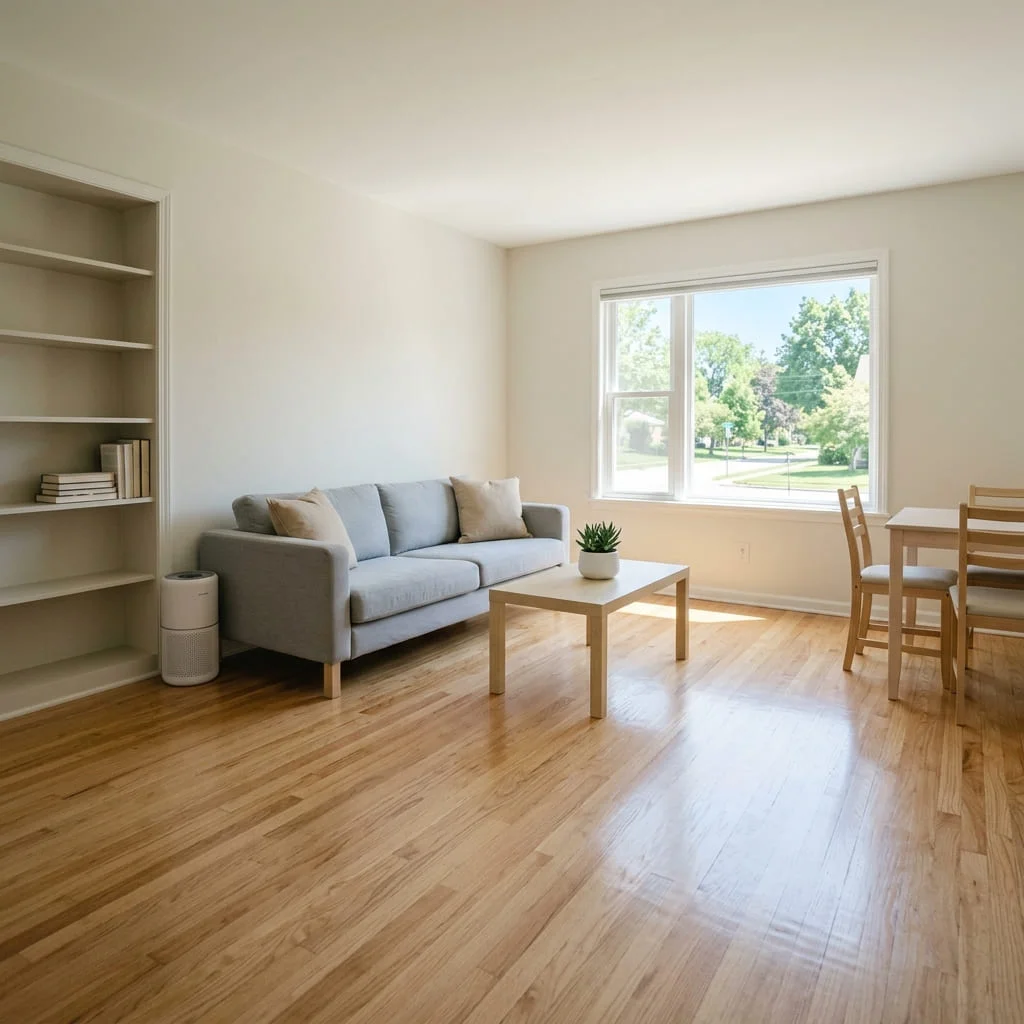
Spring Park is a half-square-mile city on the Lake Minnetonka peninsula between Mound and Orono, and Biohazard Cleanup MN covers it around the clock. Hoarding cleanup is what we are called for most here, with gross filth remediation, odor removal, estate clearing, and after-death care close behind.
What makes Spring Park different from the rest of the west metro is the housing itself. A large share of the city is condominium, townhome, and apartment units rather than detached houses, packed onto a narrow strip of land with water on both sides. That changes the nature of almost every call we take here. The cleanup is rarely the hard part. The hard part is that a unit is not a house, and the question of who is responsible for it has an answer written down somewhere in a set of declarations nobody has read in years.
Services in Spring Park
Hoarding cleanup leads — the rest follows as needed.
Hoarding and squalor account for most of our Lake Minnetonka calls. Where a death, an active biohazard, or a full clearance is involved as well, the same crew handles all of it.
- Hoarding Cleanup Flagship Compassionate, judgment-free clearing of hoarded homes — one room at a time. View details
- Animal Hoarding Cleanup Safe cleanup of homes affected by animal waste, odor, and contamination. View details
- Unattended Death Cleanup Careful, discreet cleanup after a death that went undiscovered. View details
- Crime Scene Cleanup Thorough biohazard cleanup and restoration after a crime. View details
- Blood & Bodily Fluid Cleanup Proper decontamination of blood and bodily-fluid spills. View details
- Suicide Cleanup Gentle, private cleanup so families never have to face the scene. View details
- Gross Filth & Squalor Cleaning Deep cleaning and sanitizing of severely neglected living spaces. View details
- Estate Cleanouts Full property clearing when a home also needs biohazard care. View details
Who is responsible for a cleanup in an association building
Who is responsible for a cleanup in an association building is the
first question worth answering, because it decides who authorizes the
work and whose money pays for it. Nothing about the cleaning changes.
What changes is the paperwork around it, and getting that wrong costs
weeks.
The general shape below holds across most Minnesota common-interest
communities, but your declarations and bylaws are the actual authority
and they vary building to building. Read them, or ask your property
manager for the relevant section, before you agree to pay for
anything.
Where responsibility usually falls
Inside the walls
The unit owner
Almost every association document puts the interior of the unit on the owner — contents, finishes, flooring, cabinetry, and the fixtures serving that unit alone. A hoarding cleanup, a gross-filth remediation, or an after-death cleanup inside one unit is normally an owner expense, and it is normally the owner or their family who authorizes the work.
Common and shared elements
The association
Hallways, stairwells, exterior walls, roofs, and the shared systems that run through a building are usually the association’s responsibility. If odor or contamination has reached a corridor, a shared chase, or a neighboring unit, that part of the problem tends to become an association matter — which is why boards sometimes call before owners do.
Limited common elements
Genuinely unclear
Balconies, patios, garages, storage lockers, windows, and the duct or plumbing runs between units sit in a gray band that every set of declarations defines differently. Read the declarations and bylaws before assuming, because two buildings on the same street in Spring Park can split these the opposite way.
This is general information about how common-interest communities typically allocate responsibility, not legal advice, and every association is governed by its own recorded documents. Confirm your situation with your board, your property manager, or an attorney. What we can tell you precisely is what work the unit actually needs.
Call (612) 493-2982Why a quiet building makes discretion harder, not easier
A quiet building makes discretion harder because there is no traffic
to hide in. On a busy street a van is one of forty. In a Spring Park
association with a shared lot, a single unfamiliar vehicle parked for
six hours is a conversation at the mailboxes by lunchtime, and the
person it is about is usually a neighbor who is already
embarrassed.
So we plan the approach the same way we plan the work. Vehicles carry
no signage and no lettering. Crews arrive in plain clothing and change
on site if protective gear is needed. Loads are bagged and closed
inside the unit rather than in a corridor, and where a service entry,
rear door, or off-hours window exists we use it. Biohazard Cleanup MN
would rather take an extra half-day than have a cleanup become the
building’s news.
What a Spring Park cleanup involves
A Spring Park cleanup involves sorting first, then cleaning, then
verification — and in a unit the sorting matters more than usual,
because storage is scarce and a great deal of what looks like clutter
is genuinely the household’s belongings. Documents, photographs,
keepsakes, cash, jewelry, and titles are set aside for the owner or
the family rather than cleared into a load.
Then the surfaces underneath are cleaned and decontaminated, pests and
mold are treated where present, affected materials are removed rather
than sealed over, and odor is neutralized at its source instead of
masked. Many cleanups of this kind are covered in whole or in part by
insurance depending on the cause and the policy. See our
hoarding cleanup page for the
method in full,
gross filth and squalor cleaning
where a unit has gone a long time without upkeep,
estate cleanouts
when a unit is being emptied and sold, and
what hoarding cleanup costs in Minnesota
for how a price is actually built.
Coverage & response
Serving Spring Park, Orono, and the upper lake.
Response time
Biohazard Cleanup MN takes calls anytime and a real person picks up. Same-day or next-day visits to Spring Park are usually possible, and anything involving a death or an active biohazard moves to the front of the schedule.
Who calls us here
Unit owners and their adult children, condo boards and property managers, landlords turning over a rental unit, executors settling a lake-side property, and neighbors who have reported an odor and want to know what happens next.
Nearby communities
We cover all of Hennepin County and the six other metro counties. The nearest communities with their own pages are linked here.
Frequently asked
Spring Park questions, answered honestly.
Our condo board sent a notice about a unit. Who is allowed to hire you?
Whoever has lawful authority over the space being cleaned. For the inside of a unit that is normally the owner, a family member acting with their permission, a court-appointed conservator or guardian, or a personal representative after a death. An association can hire us directly for common areas, and in some cases for a unit interior when the declarations and Minnesota law allow the board to abate a hazard and assess the cost back to the unit. Biohazard Cleanup MN does not need to know which of those applies before you call — we will talk through the situation, and you can sort out authorization before we schedule. Call (612) 493-2982 and we can walk through it.
Can you get in and out of a lake-side condo building without everyone noticing?
Yes, and in a building this close together that is the part we plan first. Our vehicles carry no signage, crews wear plain clothing through common areas, and loads are wrapped and closed before they leave a unit. We can work early, late, or across a weekend, use a service entrance or a rear door where one exists, and stage a container off-site so nothing sits in a shared lot longer than it has to. Biohazard Cleanup MN can also coordinate elevator or corridor use with a building manager without telling them what is in the unit.
Will homeowner’s insurance cover a cleanup in a condo?
It often helps, though condo coverage splits in a way single-family coverage does not. A unit owner usually carries their own policy for contents and interior finishes, while the association carries a master policy over the building. Which policy responds depends on the cause of the loss and on where the damage is, so a cleanup can end up partly on one and partly on the other. Sudden and accidental causes tend to be treated more favorably than gradual ones. We provide an itemized written estimate and before-and-after photographs that can go to either adjuster, and we recommend opening the claim before work starts.
The smell is coming from the unit next door. What can we actually do?
Report it to the association in writing first, because a documented complaint is what gives a board grounds to act. Odor crossing between units is usually treated as a shared-element issue rather than a private one, and the association is the party with a right of entry under most declarations. In the meantime, do not try to seal or mask it — an odor that strong is a sign that something is still present, and covering it makes the eventual cleanup harder to scope. Biohazard Cleanup MN can speak with a board or a property manager about what a proper remediation would involve. Reach us any time at (612) 493-2982.
A unit, a building, or a board decision — tell us what you are dealing with.
Describe the property and we will tell you what is involved, what it is likely to cost, and how soon we can be there.