
Anoka County
Hoarding and biohazard cleanup in Andover, Minnesota.
Discreet cleanup for Andover's large-lot properties — hoarding cleanup first, gross filth remediation, odor removal, estate clearing, and after-death care alongside it. Unmarked vehicles, no judgment. Call us.
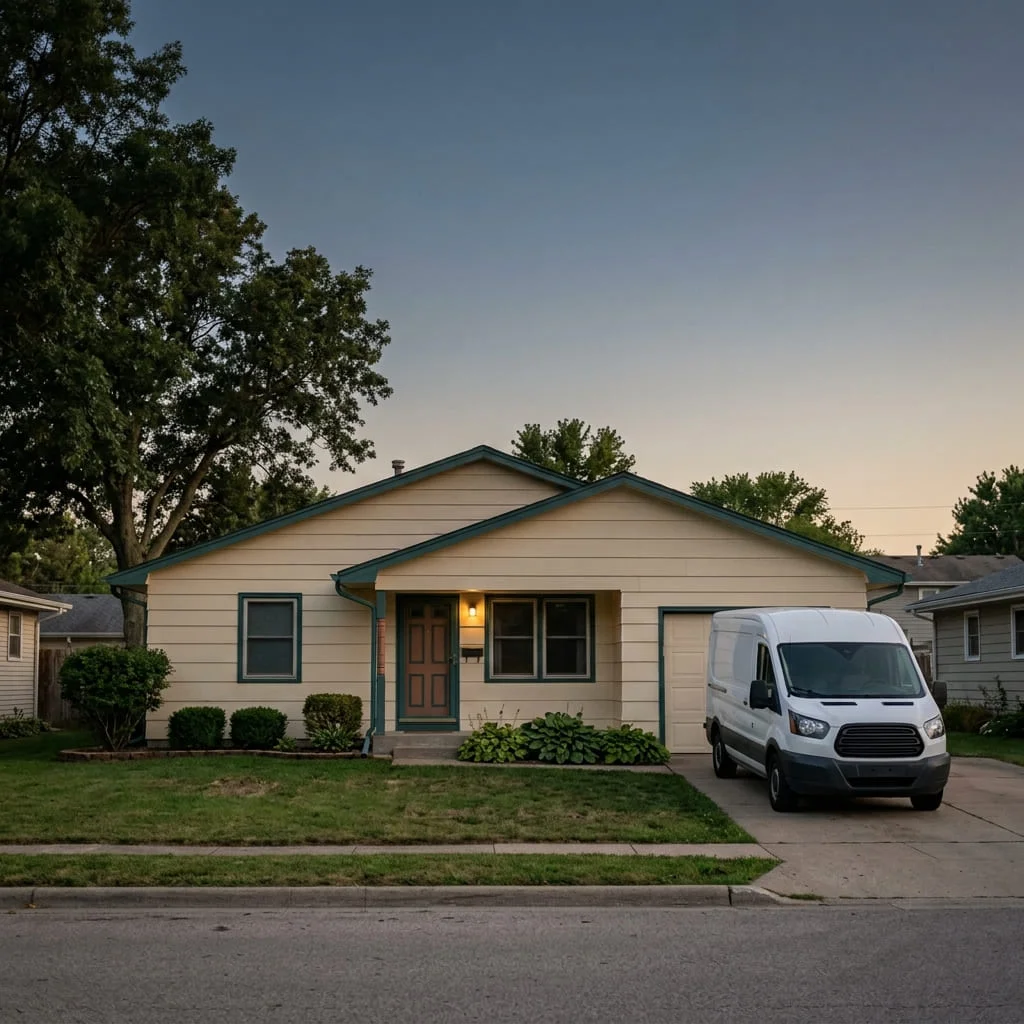
Andover grew fast through the nineteen-nineties and two-thousands, but it grew differently than most of its Anoka County neighbors. Where Coon Rapids and Anoka filled in with fairly standard suburban lots, Andover kept larger minimum lot sizes as farmland turned into subdivisions — a third of an acre and up, sometimes well beyond that. Biohazard Cleanup MN covers Andover as part of our regular service area, with hoarding cleanup first and gross filth remediation, odor removal, estate clearing, and after-death care alongside it.
That one decision about lot size still shapes an Andover call today. Bigger lots mean more room to store things, often a private well and septic system instead of city utilities, and a lot more distance between a house and whoever might otherwise have noticed something was wrong.
Services in Andover
Hoarding cleanup leads — the rest follows as needed.
Hoarding and squalor account for most Andover calls, often on properties with their own well and septic system. Where a death, an active biohazard, or a full estate clearance is part of it, the same visit covers all of it.
- Hoarding Cleanup Flagship Compassionate, judgment-free clearing of hoarded homes — one room at a time. View details
- Animal Hoarding Cleanup Safe cleanup of homes affected by animal waste, odor, and contamination. View details
- Unattended Death Cleanup Careful, discreet cleanup after a death that went undiscovered. View details
- Crime Scene Cleanup Thorough biohazard cleanup and restoration after a crime. View details
- Blood & Bodily Fluid Cleanup Proper decontamination of blood and bodily-fluid spills. View details
- Suicide Cleanup Gentle, private cleanup so families never have to face the scene. View details
- Gross Filth & Squalor Cleaning Deep cleaning and sanitizing of severely neglected living spaces. View details
- Estate Cleanouts Full property clearing when a home also needs biohazard care. View details
Why a bigger lot changes the job
A bigger lot changes almost every practical detail of a cleanup, from
what a septic system can take to how much a garage and a shed can
absorb before anyone else sees it. None of the differences below are
about one kind of property being worse than another — they are what
the first visit is actually checking before anything gets
quoted.
Andover has both large-lot subdivisions and a smaller number of homes
closer to Highway 10 on standard suburban lots. Knowing which one is
on the phone changes the plan from the first call.
| What it is | What it means for the job |
|---|---|
| The lot itself | A house near Andover’s Highway 10 corridor sits on a fairly ordinary suburban lot with close neighbors on either side. Most of the city, though, was built to a larger minimum lot size — a third of an acre, a half-acre, sometimes more — which is a very different starting point for how much can accumulate and for how long before anyone outside the household notices. |
| Water and waste | Because so much of Andover developed on those larger lots rather than close to existing city sewer lines, private well and septic systems are common even in subdivisions built as recently as the two-thousands — not just on older farmsteads. That changes what a cleanup can use on site: water use, cleaning products, and where anything gets rinsed are all planned around the septic system rather than a municipal connection. |
| Storage | A large-lot Andover property usually has an attached two- or three-stall garage and, on the bigger lots, a detached shed or small pole building as well. Overflow has two places to go instead of one, which means a garage that looks manageable from the driveway can still be hiding a shed that has not been opened in years. |
| What the basement looks like | Andover’s rolling terrain means a lot of its houses have a daylight or lookout basement rather than one fully below grade — a real, usable lower level with its own windows and sometimes its own door. That is exactly the kind of space that quietly becomes a second household’s worth of storage, separate from whatever is happening upstairs. |
| How long it goes unnoticed | Bigger lots and longer driveways mean fewer casual sightlines from the street or from a neighbor’s kitchen window. In a tighter subdivision, a problem tends to get noticed by somebody outside the family. In Andover, it is much more often a family member driving out for a visit who is the first person to actually see it — which is normal here, not a sign anyone failed to notice sooner. |
Whether the property is on a third of an acre or a full ten, the same people answer the phone and the same standards apply. Describe what's actually there and the visit gets planned around it.
Call (612) 493-2982Why the septic system gets checked before anything is quoted
The septic system gets checked before anything is quoted because it
sets real limits on what a cleanup can do on site — how much water
gets used, what can go down a drain, and how a saturated or failing
drain field changes the order of the work. A system that has not been
serviced in years is worth flagging to whoever owns the property
regardless of the cleanup itself.
Our Hamel page covers the same
private well and septic considerations in more depth, since Hamel and
Medina share this with a lot of Andover. And
gross filth and
squalor cleaning covers what happens once materials actually have
to come out rather than be cleaned.
What an Andover cleanup involves
An Andover cleanup involves sorting first, then cleaning, then
verification, in that order and at whatever pace the household can
manage. Documents, photographs, keepsakes, medications, cash, and
anything of value are set aside for the family rather than cleared
into a load, and anything ambiguous is photographed and asked about
rather than guessed at.
Then the surfaces underneath are cleaned and decontaminated, affected
materials are removed rather than sealed over, pests are addressed
where present, and odor is neutralized at its source. Many cleanups
of this kind are covered in whole or in part by homeowner's insurance
depending on the cause and the policy. See
hoarding cleanup for the
method in full,
estate cleanouts where a
property has to be cleared entirely,
unattended death
cleanup where someone has passed away at home, and
how to help
a family member who hoards if you are the one who just found out.
To talk it through,
call (612) 493-2982.
Coverage & response
Serving Andover, Anoka, and northern Anoka County.
Response time
Call for availability. If the situation involves a death, an active biohazard, or a blocked exit, say so at the start of the call.
Who calls us here
Adult children who live elsewhere and visit a parent's large-lot property, homeowners calling for themselves, case managers, and executors settling an estate that includes a shed or a lower level nobody has opened in a while.
Nearby communities
We cover all of Anoka County and the six other metro counties. The nearest communities with their own pages are linked here.
Anoka, MNCedar, MNSaint Francis, MN All Anoka County & metro areas
Frequently asked
Andover questions, answered honestly.
Why does Andover feel more spread out than Coon Rapids or Anoka right next door?
Because it was built that way on purpose. As Andover grew through the nineteen-nineties and two-thousands it kept larger minimum lot sizes than most of its Anoka County neighbors, which is why the city reads as more rural even though it is fully suburban in age and population. The practical effect for a cleanup is more space per property, more places for things to accumulate, and often a private well and septic system to plan around.
The property is on a well and a septic system. Does that change how the work is done?
It does, and it is worth mentioning on the first call. Water use and cleaning products get planned around what a septic system and its drain field can actually handle, rather than assuming an unlimited municipal sewer connection. None of this makes a hoarding or biohazard cleanup harder to do safely — it just changes the plan going in, the same way it does on a Hamel or Rogers property.
Nobody nearby seems to have noticed anything is wrong. Does that mean it isn’t that serious?
Not necessarily, and it is one of the more common things families say when they call from Andover specifically. On a large lot with a long driveway, a house can look completely ordinary from the road for years. The person most likely to notice is an adult child or relative who visits rather than a neighbor who can see in, so a call often comes well after the situation has been building. There is no judgment in that — it is simply how privacy works on a bigger property.
Will homeowner’s insurance help pay for this?
Sometimes, in part, and it comes down to cause rather than the size of the lot. A cleanup tied to a specific covered event — a death in the home, a sudden water loss, a septic backup where the policy carries that endorsement — is often covered at least partly. Gradual accumulation over years is more commonly treated as maintenance. Read the declarations page and ask the carrier directly; our guide on who pays for cleanup covers the usual routes, and for a straight answer about your situation, call (612) 493-2982.
Bigger lot, same care — nothing cleared blind.
Describe the property and we will tell you what is involved, what it is likely to cost, and how soon we can be there.